
Home repair & carpentry
Drywall Repair & Texturing in the Livingston Area
Holes patched, water damage repaired, new drywall hung and textures matched so the repair blends into the wall around it.
Walls that look like nothing happened
Drywall damage is one of the most common repairs in any home. A doorknob through the wall, a crack above a doorway, or a brown stain spreading across the ceiling all need more than a dab of spackle to disappear.
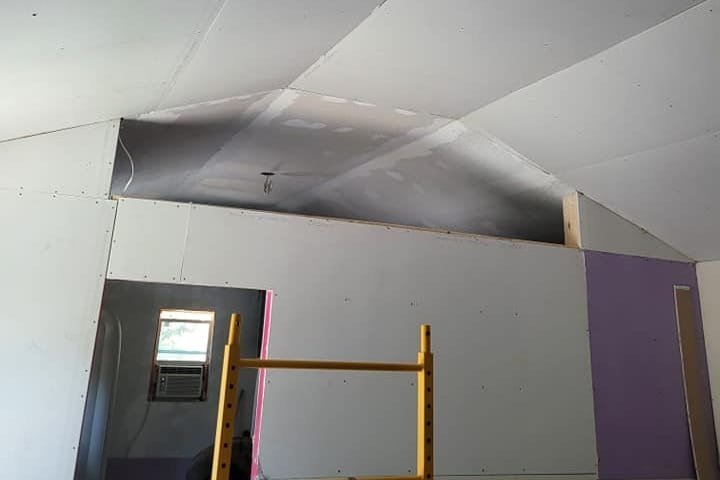
Onalaska Builders repairs drywall with our own crews, from small patches to hanging new sheets across a whole room.
Drywall work includes:
- Patching holes and cracks
- Repairing water-damaged drywall
- Hanging new drywall
- Matching wall and ceiling textures
Common question
Can you match my existing texture?
The goal of any drywall repair is a patch you cannot pick out once it is painted, and texture is usually what gives a repair away. Walls and ceilings in this area commonly have a sprayed or troweled finish such as orange peel or knockdown, or a smooth finish.
Matching means reproducing the pattern, the size of the texture and how heavy it is, then feathering it into the surrounding wall. Newer textures are usually easier to blend. On older walls with worn or unusual textures, an exact match can be harder, and sometimes texturing a larger area gives a better result than a small spot.
Plan to repaint after the repair. Even with a good texture match, fresh paint over the patch alone can stand out, so painting the whole wall usually looks best.
Water damage
Repairing water-damaged drywall
Stains, sagging ceilings and soft, crumbling drywall are signs of water damage. Before any repair:
- Stop the source. A roof leak, plumbing leak, shower or window problem has to be fixed first, or the new drywall will be damaged again. See roof repair and window repair.
- Let it dry. Framing and insulation behind the wall need to be dry before they are closed up.
- Check for rot. Wet framing, sills or subfloor may need replacing. See rotten wood replacement.
- Watch for mold. If you see or smell mold, have it assessed before repairs. Larger mold problems in Texas generally call for licensed mold professionals.
Water-damaged drywall is usually cut out and replaced rather than patched over.
Cracks
What cracks in drywall can mean
- Hairline cracks along seams are often from normal settling or seasonal movement and are a routine repair.
- Diagonal cracks from the corners of doors and windows that keep coming back can point to foundation movement. See foundation repair.
- Nail pops, small round bumps or holes, happen as framing shifts and are easy to fix.
If the same cracks keep reopening, it is worth finding out why before patching again.
Lake and timber country
Drywall repair around Livingston
Humidity, storms and seasonal ground movement all show up on drywall in East Texas homes. We repair drywall within about 35 miles of Onalaska, including Livingston, Point Blank, Coldspring, Shepherd, Groveton, Trinity, Huntsville, Cleveland and Willis. See our full service area.
More general home repair & carpentry services
Related services
Questions
Drywall & Texturing questions
Can you match my wall texture?
Matching texture is part of our drywall work, and the goal is a repair that blends in once painted. Newer textures are usually easier to match; older or unusual textures can be harder, and sometimes texturing a larger area gives a better result.
Can water-damaged drywall be patched?
Water-damaged drywall is usually cut out and replaced. The source of the water has to be fixed first, and the framing behind it needs to be dry and checked for rot.
Why do cracks keep coming back above my doors?
Recurring diagonal cracks from door and window corners can point to foundation movement. It is worth finding the cause before patching again.
How do I get an estimate for drywall repair?
Call (806) 480-0328 or send the estimate form with the town or ZIP code and a description of the damage. Photos help.
Get started
Need a wall fixed?
Tell us what happened and how big the damage is. Send the form or give us a call.