

Slab Foundations
Slab-on-grade concrete foundations for homes, garages and sheds.
More about slab foundations →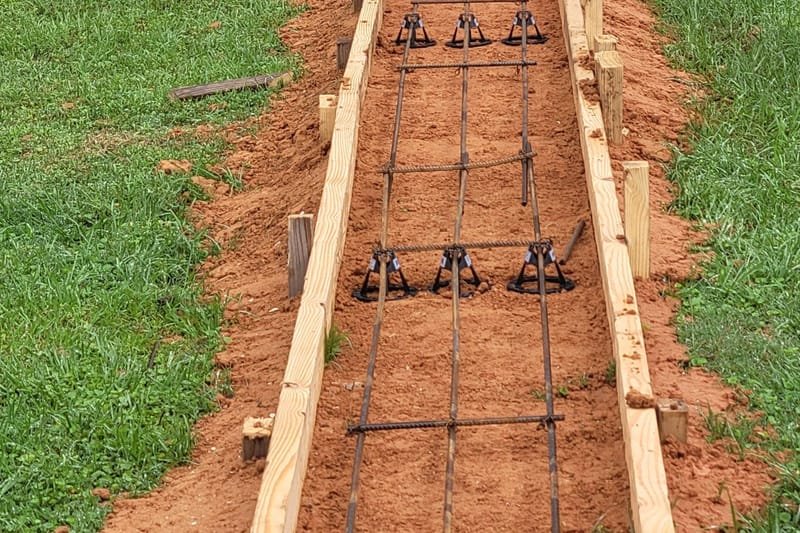
Foundation work
New slab and crawl space foundations, footings, foundation repair and concrete flatwork, from the same company that clears the lot and builds the house.
Everything you build depends on what is underneath it. A foundation carries the weight of the house, keeps it level as the ground around it gets wetter and drier, and gives floors, walls and doors something true to line up with for decades.
Onalaska Builders builds and repairs foundations with our own crews. Because we also handle dirt work and home construction, the site, the foundation and the building can be planned together rather than passed between separate contractors.
Our foundation and concrete services include:
Our services
From a new home foundation to a cracked slab or a shop floor.
Slab-on-grade concrete foundations for homes, garages and sheds.
More about slab foundations →
Concrete footings, block walls and support piers for pier-and-beam and crawl space foundations.
More about crawl space & footings →
Fixing cracked slabs, installing piers and stabilizing foundations that have settled or shifted.
More about foundation repair →
Choosing a foundation
Most homes and outbuildings around the lake sit on one of two foundation types, and each has its place.
The right choice depends on the lot, the soil, how the site drains, the design of the building and your budget. If your plans specify a foundation design, that design governs. Otherwise, it is a decision worth talking through before any concrete is poured.
East Texas ground
Clay soils, which are common in parts of East Texas, swell when they are wet and shrink when they dry out. When the ground under a foundation moves unevenly, the foundation can move with it, and that shows up as cracks, sticking doors and sloping floors.
That is why the work around a foundation matters as much as the concrete itself:
Soil varies from lot to lot, even within the same area, so the foundation and site work are best planned for the specific property.
Existing homes
Foundation problems usually announce themselves gradually. Watch for:
Not every crack means a serious problem, but these are worth having looked at. Our foundation repair page explains the common causes and repair approaches.
Lake and timber country
Lots across Polk, San Jacinto, Trinity and Walker counties range from high, level ground to sloped lakefront parcels and low sites that hold water. Those differences shape which foundation makes sense and how the site around it should be prepared.
We build and repair foundations within about 35 miles of Onalaska, including Livingston, Point Blank, Coldspring, Shepherd, Groveton, Trinity, Huntsville, Cleveland and Willis. See our full service area.
Questions
It depends on the lot, the soil, drainage, the building design and your budget. Slabs suit level or leveled sites and are common for homes, garages and shops. Pier-and-beam foundations can work with sloped lots and leave access under the floor. If your plans specify a foundation design, that design governs.
A common cause is uneven movement in the soil underneath, such as clay soil swelling and shrinking as it gets wetter and drier. Poor drainage, plumbing leaks and poorly prepared ground can add to the problem.
Yes. Driveways, patios and shop floors are covered on our concrete flatwork page.
Call (806) 480-0328 or send the estimate form with the town or ZIP code. Tell us whether it is a new foundation or a repair, what the building is and, for repairs, what signs you are seeing.
Get started
Tell us about the project, whether it is a new home, a shop floor or a foundation that has started to move. Send the form or give us a call.