
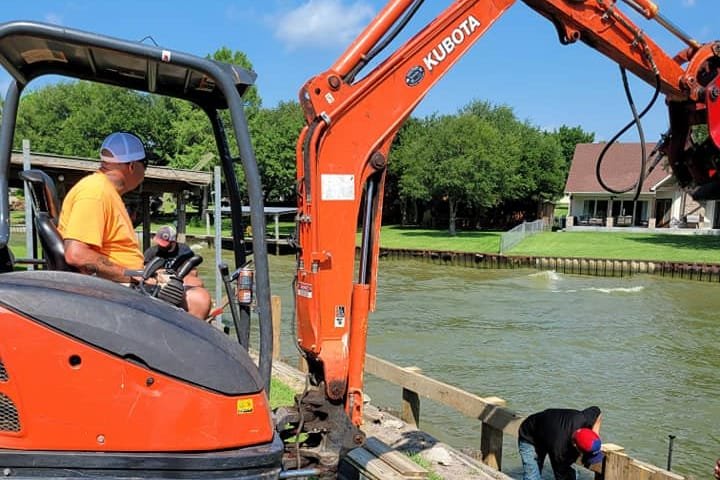
Dirt work & land management
Excavation & Grading in Livingston and the Lake Livingston Area
Moving dirt, leveling uneven ground and shaping slopes so your building site is stable and rainwater runs away from it, not toward it.
Shaping the ground before you build
Once a lot is cleared, the ground rarely sits the way a building needs it. There may be a slope to cut back, low spots to fill, or high ground that sends water straight toward where the house will go. Excavation and grading fix that before anything is built.
Onalaska Builders does this work with our own crews, and because we also build house pads and foundations, the grading can be planned around the structure that will sit on it.
Excavation and grading work includes:
- Leveling the building area
- Cutting and shaping slopes
- Moving, filling and spreading dirt
- Setting the grade so water drains away from structures
Why it matters
Why grading comes before the foundation
Grading does two jobs at once. It gives the building a level, stable area to sit on, and it decides where rainwater goes when it hits the lot.
A foundation poured on ground that slopes toward it will collect water along its edges every time it rains. Over time that can mean soggy soil around the house, water under outbuildings and washed-out areas next to the driveway. Getting the grade right while the lot is still open is far easier than correcting it after the house is built.
The usual goal is simple: a level building area, with the surrounding ground falling away from it on all sides. Where the natural lay of the land makes that hard, drainage work such as a swale or French drain can carry the water the rest of the way.
Lake lots
Does a sloped lake lot need grading before building?
Often, yes. Many lots around Lake Livingston fall toward the water, and some drop off steeply near the shoreline. A slope is not a problem in itself, but the part of the lot where the house, garage and driveway will sit usually needs to be leveled, and the ground around it shaped so water moves past the building rather than into it.
How much grading a sloped lot needs depends on:
- How steep the slope is where you want to build.
- The size and shape of the building footprint, including garages and patios.
- The foundation type. A crawl space foundation can sometimes work with more of the natural slope than a slab.
- Where the water goes once it leaves the building area.
Work close to the lake shoreline can come with its own rules, so it is worth checking what applies to your property before planning grading near the water.
Common projects
Grading jobs beyond new construction
Grading is not only for new builds. It is also the fix for a number of problems on established property:
- Regrading around an existing home where the ground has settled and now slopes toward the foundation.
- Leveling a site for an outbuilding, such as a garage, shop, shed or pavilion.
- Preparing ground for a patio or flatwork before concrete is poured.
- Evening out a yard before landscaping or new grass.
- Shaping a driveway route so it drains and stays usable. See driveways and culverts.
Lake and timber country
Excavation and grading around Livingston
Ground conditions vary a great deal across Polk, San Jacinto, Trinity and Walker counties, from lakefront lots to rural acreage, and low areas can stay soft for a while after heavy rain. That affects how and when grading can be done, so it helps to plan the work around the specific property rather than a one-size approach.
We handle excavation and grading within about 35 miles of Onalaska, including Livingston, Point Blank, Coldspring, Shepherd, Groveton, Trinity, Huntsville, Cleveland and Willis. See our full service area.
More dirt work & land management services
Related services
Questions
Excavation & Grading questions
What is the difference between excavation and grading?
Excavation is digging and moving dirt, such as cutting into a slope or removing soil. Grading is shaping the surface to the level and slope you need, including how water drains across it. Most site work involves both.
Can regrading fix water problems around an existing house?
Regrading around an existing home is a common fix when the ground has settled and now slopes toward the foundation. The aim is to have the soil fall away from the house so rainwater drains off rather than collecting against it.
Do I need grading and a house pad?
Usually both. Grading levels and shapes the building area and the ground around it, and the house pad is the built-up, compacted base the foundation sits on. They are planned together.
How do I get an estimate for grading?
Call (806) 480-0328 or send the estimate form with the town or ZIP code of the property, what you want to build or fix, and whether the lot is sloped or has standing water.
Get started
Need your site leveled?
Tell us where the property is and what you are planning, whether it is a new build, an outbuilding or a drainage problem around your home.